
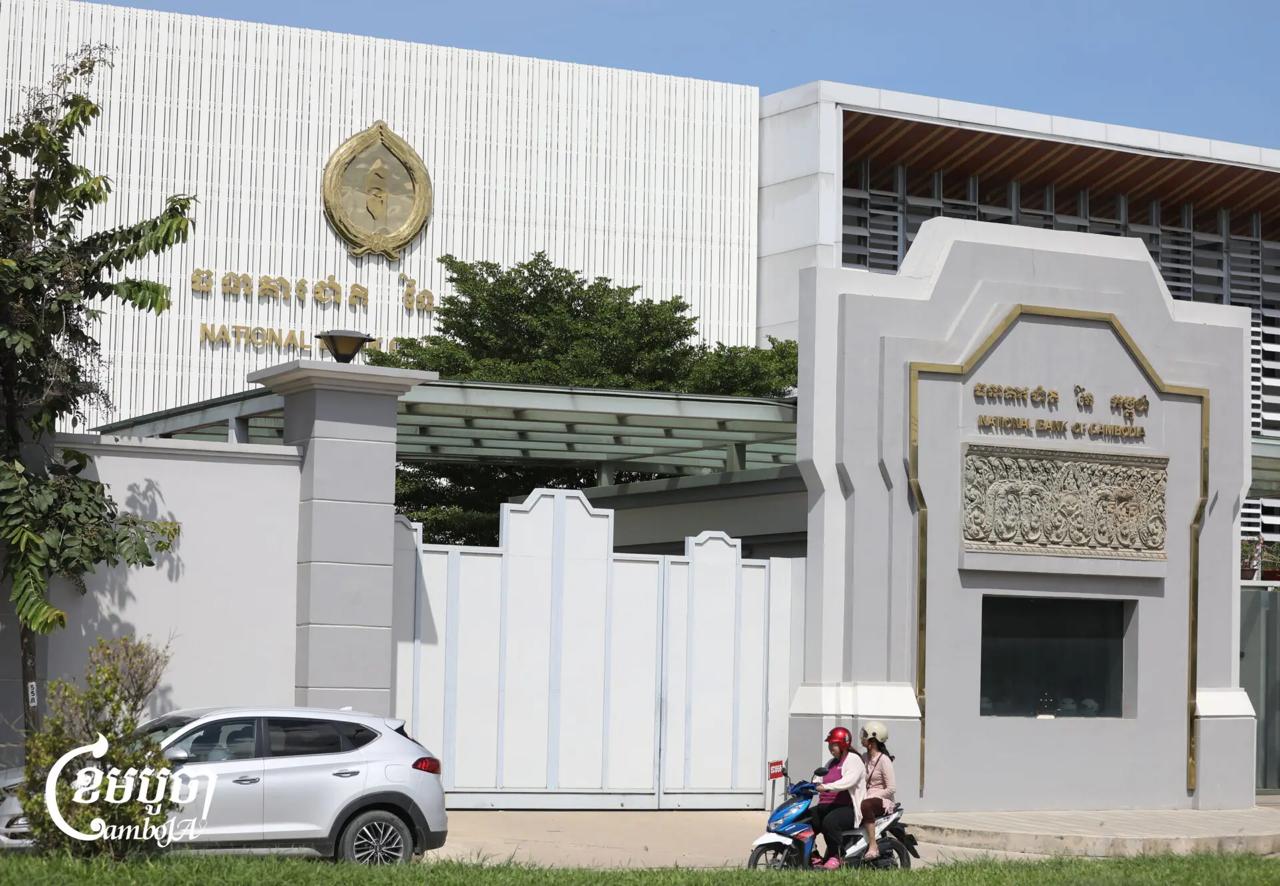
Cambodia’s deposit-taking banks and financial institutions must hold additional high-quality capital above their minimum capital requirements.
Under Prakas No. B37-025-536, issued by the National Bank of Cambodia on 19 November 2025, institutions must maintain a capital conservation buffer equal to 2.5% of risk-weighted assets, in addition to the minimum Common Equity Tier 1 ratio of 8%.
What does the rule do?
The buffer gives financial institutions additional capacity to absorb losses during periods of financial stress. It consists of a capital conservation buffer and a countercyclical capital buffer.
The countercyclical component may be set between 0% and 2.5% depending on credit conditions. The NBC’s 2025 Financial Stability Report recorded it at 0%, while the full 2.5% capital conservation requirement remained applicable.
An institution that falls into its buffer may continue operating, but restrictions can apply to dividends, share buybacks and discretionary staff bonuses. The closer its capital ratio moves toward the minimum requirement, the more earnings it must retain.
If the buffer cannot be restored within 10 working days, the institution must prepare a board-approved capital management plan and submit it to the NBC within the following five working days.
Who is affected?
The rule directly applies to deposit-taking banks and financial institutions supervised by the NBC, including on a consolidated basis where relevant.
Borrowers are affected indirectly. Institutions under capital pressure may reassess lending limits, collateral requirements, interest pricing and exposure to higher-risk sectors. The rule does not impose a general restriction on lending, but it can influence how aggressively a bank extends credit.
Shareholders should also review dividend expectations. A profitable institution may still face restrictions on distributions if its capital ratio falls within the buffer range.
What should institutions do?
Banks and affected financial institutions should test their capital positions against different credit-loss scenarios, review planned distributions and confirm that internal reporting can identify a buffer breach quickly.
Corporate borrowers should not assume that an existing banking relationship guarantees future credit on the same terms. Businesses approaching refinancing, expansion or a major acquisition should prepare updated financial statements, realistic cash-flow forecasts and clear collateral documentation before negotiations begin.
The rule strengthens the banking system, but it carries a commercial trade-off: institutions may need to preserve capital precisely when borrowers need more credit.
Commerce & Investment Law Group advises financial institutions, lenders and corporate borrowers on banking transactions, loan documentation, security arrangements and regulatory compliance.
This article provides general information only and does not constitute legal or financial advice.
Official source: National Bank of Cambodia – Prakas and Circulars.